The Kitchen Table Audit: Four Weeks of Real Life Inside a Michael Kors Outlet Tote
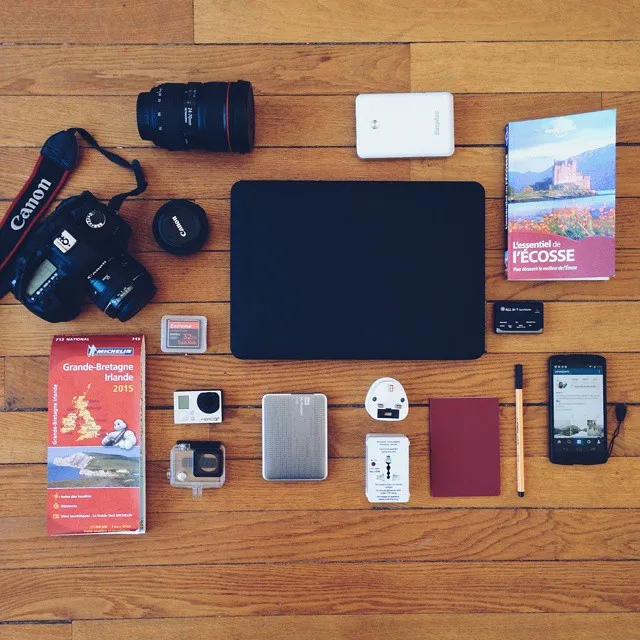
Photo: Voyages etc..., CC BY 2.0, via Wikimedia Commons
On a grey Tuesday in November 2026, I did something slightly unglamorous: I turned my Michael Kors outlet tote upside down over the kitchen table and shook. Not because I'd lost my keys — although I had, twice, in October — but because I wanted an honest answer to a simple question. What does a month of actual British life do to a designer bag?
This wasn't a styled shoot. The tote had been on the 7:52 to Waterloo, under a desk in Manchester, on the back of a cafe chair in Leeds, and through one memorably damp Saturday in Bristol. It had been rained on, overfilled, and briefly used to carry a bag of potatoes. The contents below are real, if faintly embarrassing.
The Bag and the Brief
The bag in question was a medium Jet Set tote, bought at an outlet price that didn't require a spreadsheet or a stern conversation with my bank. I chose it because it looked tidy and because the strap drop cleared a winter coat. What I didn't do was think carefully about the inside. Two slip pockets, one zip pocket, and a big open middle. That's it. A lovely empty stage, waiting for chaos.
Four weeks later, the stage was full.
What Earned Its Keep
Let's start with the good stuff — the things that justified their space every single day.
- The Oyster card, living in the back slip pocket. This was the single best decision I made. No fishing, no patting down the lining at the barrier while a queue sighs behind me.
- A folded rain hood. Not a proper umbrella — I keep forgetting those — but one of those packable hoods that costs about the same as a meal deal and has saved me three times. It lives in the zip pocket and takes up less room than a purse.
- A small zip pouch containing lip balm, hand cream, two fabric plasters and a blister plaster, plus a foil strip of paracetamol. This pouch is the difference between a functioning adult and a woman buying plasters at a station Boots for £4.50.
- A compact battery pack and a short cable. Non-negotiable in 2026. The cable is short on purpose so it doesn't become a nest.
- Tissues, a pen, a hair tie, a safety pin. The quiet heroes.
- A foldaway shopper. It folds into its own little pouch and has carried everything from a supermarket shop to a wet umbrella.
That's the essentials list. It's not long. It fits comfortably in a medium tote with room left for a paperback and a small water bottle.
The Squatters
Now the uncomfortable part. The clutter hadn't arrived in one go. It had crept in, one item at a time, each one feeling reasonable in the moment.
I found eleven receipts, three of which had faded to ghost paper. I found a Tesco Clubcard and a Boots Advantage card in the wrong pocket — the same pocket as a hair clip, which explains a lot about my mornings. I found two spare hair ties, a bobby pin, a coffee stamp card with one stamp left on it, and a pen that had leaked just enough to leave a small blue bruise on the lining.
There was also a train ticket from early October, kept 'for expenses' and never claimed, and a packet of crisps reduced to crumbs in the corner. And a single glove. Not a pair. One glove. I have no explanation.
The lesson isn't that the tote is too small. It's that a big open middle is an invitation. Without some kind of internal structure, everything migrates, and the bag slowly becomes a soft-sided recycling bin.
The Pouch System That Fixed It
I'm not naturally a pouch person. I'm a 'shove it in and hope' person. But after the audit, I set up three small pouches, each with a different texture so I can find them by feel:
- The face-and-first-aid pouch — lip balm, hand cream, plasters, painkillers, a tiny mirror.
- The tech pouch — battery pack, cable, earbuds.
- The paper pouch — receipts I actually need, loyalty cards, stamps, a pen that doesn't leak.
The tote's slip pockets got assigned too: phone in one, Oyster card in the other, keys on a small clip attached to the zip pull. At home, everything lands in a shallow tray by the door. It sounds fussy. It takes about ninety seconds a day and has saved me roughly four hours of rummaging this month.
What the Contents Told Me About Size
Here's the part worth knowing before you buy. The audit confirmed that a medium tote is the right size for my particular brand of British everyday — a commute, unpredictable weather, and a habit of saying yes to after-work drinks.
A mini or a small crossbody would have failed the rain-hood-and-battery-pack test. A larger tote would have simply invited more squatters, because empty space is a magnet for 'just in case' items. The medium acts as a gentle forcing function: if it doesn't fit in a pouch or a pocket, it probably doesn't need to come.
That won't be true for everyone. If you carry a laptop, a gym kit or a child's entire snack economy, size up. If you're a committed minimalist, size down and let the constraint do the work. The point is to test the bag with your actual contents, not the imaginary contents of a person who owns one lipstick and no receipts.
The Ten-Minute Reset
Once a month, on the first Sunday, I empty the tote completely, wipe the lining, and put back only what earned its place. It's not a deep clean. It's a small act of kindness to future me, who will be standing at a ticket barrier in the rain, needing the Oyster card to be exactly where it should be.
A designer bag at an outlet price is still an investment, even a sensible one. Looking after it isn't about keeping it pristine for a photograph. It's about making sure the thing you carry every day actually works for the life you're carrying it through — crumbs, plasters, single gloves and all.