Retire, Repair or Resell: The Graceful Goodbye to an Old Michael Kors Bag
There is a specific moment in outlet shopping when you get home, put the new bag on the bed, and then look at the old one with a mixture of affection and mild guilt. It has been to Portugal, through two winters and possibly a wedding. Now it has been quietly demoted.
What happens next is where most of us improvise badly — the bag goes in a wardrobe, then a cupboard, then a bin bag in the loft, and three years later it turns up with a broken strap and a hardened base. This is a plan for doing it properly.
Step one: the ten-minute honest audit
Before you decide anything, put the bag under a bright light and go over it like a buyer would. Check the corners for scuffing, the handles for cracking at the bend, the lining for pen marks, the zip for skipped teeth, the hardware for flaking. Then check what you would actually get for it.
Search the model name on Vinted and eBay and filter to sold listings rather than asking prices. Asking prices are fantasy. Sold prices are the market, and the gap between them is often £30 or more.
Now the arithmetic. If the bag is in good shape and the model still sells for £60 to £90, selling is worth the admin. If it is scuffed at the corners and the market says £25, then a repair quote of £40 tells you something useful: repair only makes sense if you plan to keep it. And if it needs a new zip, new handles and a new lining, it is a donation, not a project.
Reselling on Vinted: slow, free, surprisingly effective
Vinted is the softest landing for a mid-price designer bag in the UK. The audience is enormous, buyers pay the protection fee rather than you, and listing is quick. The trade-off is speed — desirable pieces move in days, less popular models can sit for a month or two.
Photograph it properly. Daylight, a plain wall, no clutter, and include the inside, the base, the hardware and the label. Mention every flaw in the description. It feels counter-intuitive, but honest listings sell faster and come back to haunt you less. Price at the sold-listing figure rather than slightly above it, and be prepared to accept a sensible offer.
eBay and the auction route
If you want it gone this month rather than eventually, eBay still does the job. Auction with a low start gets attention; buy-it-now gets a better price from a smaller audience. Fees shift around, so check the current private-seller rules before you list rather than trusting what a friend told you two years ago.
Whichever platform you use, protect yourself. Send tracked and signed, photograph the bag packed and sealed, and keep the proof. A clear listing and a tracked parcel solve 95% of disputes before they start.
Donating well (and what charity shops can actually sell)
If the bag is still usable but no longer worth selling, donate it — just do it thoughtfully. High street charity shops can sell a Michael Kors bag, but the small local shop with limited space may not have the display for it. Some charities run specialist fashion boutiques or online designer channels that will get far more for it, so ring ahead if you want the money to go further.
Send it clean, with the dust bag if you still have it, and ask about Gift Aid if you are a UK taxpayer — it adds a chunk to the charity's take at no cost to you. And do not donate anything genuinely broken or mouldy. Charity shops are not a bin with a sign on it, and their volunteers have enough to do.
Repair cafés, cobblers and the second-life option
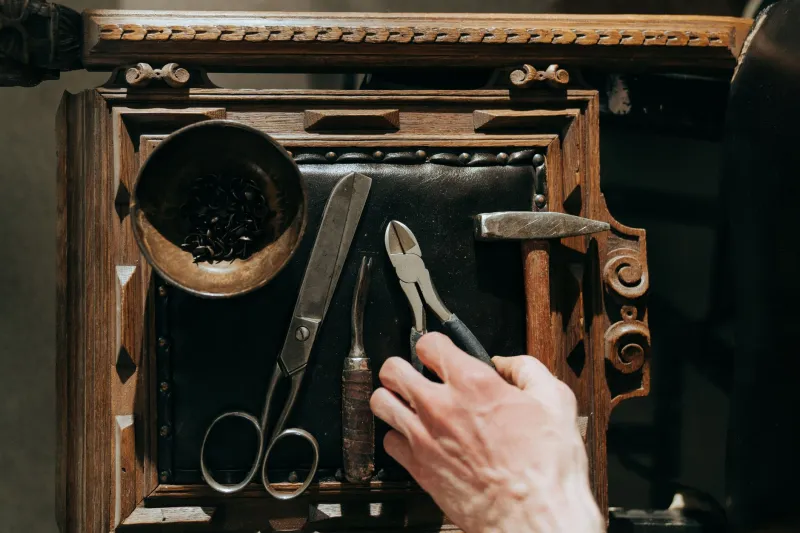
This is the option people forget. A decent local cobbler or leather specialist can restitch a seam, replace a zip pull, shorten a strap or re-edge worn corners for far less than a new bag.
Repair cafés — the volunteer-run events that have popped up in church halls and community centres across the country — are mostly known for toasters and lampshades, but plenty now have a textiles table and someone who can advise on stitching. Even if they cannot fix it, they will point you at someone who can. Search your council's website or the local Facebook group; these things are usually advertised by word of mouth.
There is also the quiet satisfaction of a repair. A bag you have had mended is a different kind of possession to one you bought. It has a history you were part of.
What leather recycling actually means in the UK
Be sceptical here. Leather is genuinely difficult to recycle, and most kerbside collections will not take it. Some councils accept bags and shoes in textile banks, where they are sorted for reuse first and downcycled second. Others do not, so check before you fill a bank with something that will be landfilled anyway.
There are also take-back schemes that come and go, and a growing number of small UK businesses that upcycle leather into card holders and keyrings. It is worth ten minutes of searching, but treat any claim of leather recycling with a raised eyebrow until you have read the small print.
The one you keep anyway
The first good bag you bought yourself is exempt from all of the above. Sell the one you never bonded with, donate the one that no longer suits your life, repair the one you still reach for — but keep, at minimum, the one that reminds you of being 26 and having just been paid.
Tuck it in its dust bag with the stuffing still in, out of direct sunlight and away from a radiator, and stop feeling guilty about it. A wardrobe is allowed to contain one object that is purely sentimental. That is not clutter, that is a small archive.
The handover checklist before the new bag comes home
Do this the same week, not the same year. Empty the old bag completely — including the receipts at the bottom, the hair grips in the lining and that one earring. Wipe it down, air it out, photograph it in daylight, and then make the call: sell, donate, repair or keep.
Give yourself seven days to list it. If it has not sold by the end of the month, drop the price once, then donate it. The point of the exercise is not to squeeze out every last pound — it is to make sure a decent bag gets another life instead of a slow, dusty retirement in the loft.